By Mohamed Rabie
A company can have history without a property-development track record. A licence, a long-established name or an impressive presentation may be useful context, but none of them alone proves that a particular developer can deliver a specific project.
This is not an investigation into an identified company. It is a buyer-focused checklist for assessing any developer before committing funds.
1. Identify the legal entity behind the project
Start with the exact company named in the sale documents. A group may contain several operating entities, project companies and brands. Check which legal entity is developing the project, which entity is selling the unit, and which entity carries the contractual obligations.
Do not assume that the history of a parent group automatically proves the delivery record of a newly formed subsidiary or a separate project vehicle. Ask for the names and registration details in writing.
2. Separate company history from development history
Years in business can be relevant, but they do not necessarily equal years of residential development. A company may have experience in trading, contracting, investment, land or joint ventures before entering property development. Those activities can be valuable, but buyers should ask what the development operation itself has delivered.
Look for completed projects, delivery dates, actual occupancy, facilities in operation and the condition of the community after residents move in. A list of launches is not the same as a list of completed and functioning properties.
3. Verify the project’s registration and buyer-fund protections
For off-plan property in Dubai, verify the project registration and applicable escrow arrangements through Dubai Land Department. DLD’s project-registration process requires the developer to open an escrow account for the project before off-plan sales proceed. Confirm the project and account information through official channels rather than relying only on a brochure or verbal assurance.
4. Review the construction and delivery evidence
Ask for current construction progress, the contractual completion date, the agreed specifications and the process for communicating delays. Where possible, compare the developer’s stated progress with independent or official project information. Understand what the sale and purchase agreement says about extensions, notices and remedies.
Be clear about the difference between a render, an announced launch, a registered project, a construction milestone, a handover and an occupied community. They are different stages.

5. Examine the product and the operating plan
5. Examine the product and the operating plan
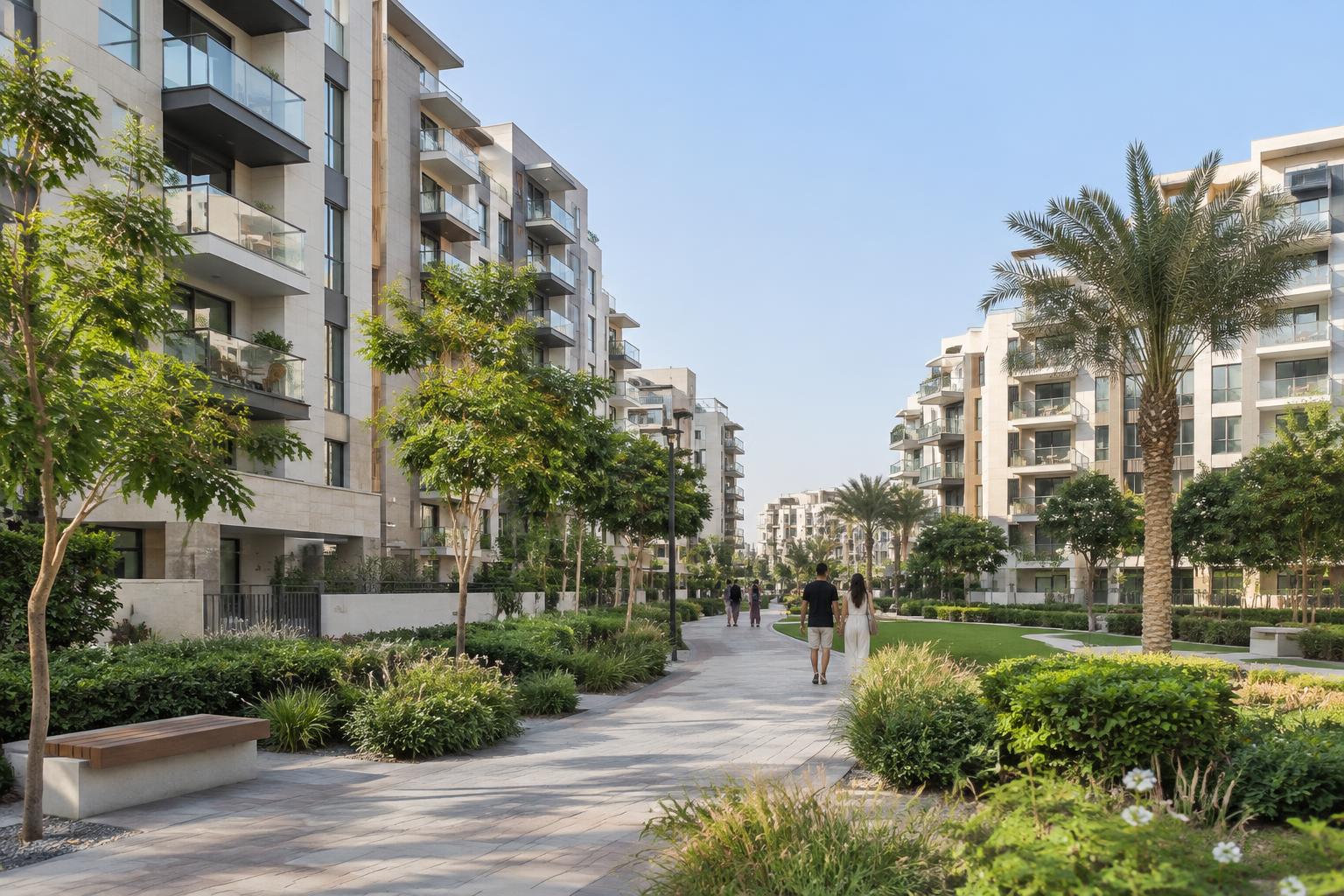
Assess the layout, finish, usable space, access, parking, amenities and surrounding infrastructure. Ask who will manage the building, how service charges are calculated and what maintenance arrangements apply after handover. A property is not finished from the buyer’s perspective when the sales team closes the booking; the building must operate.
6. Test the financial proposition
6. Test the financial proposition
Use realistic assumptions for rent, vacancy, service charges, maintenance, financing and resale. Compare like-for-like units and avoid relying on a verbal rental guarantee or an unverified capital-growth projection. If the numbers only work under the most optimistic scenario, understand that risk before proceeding.
7. Know when to pause
Pause if the legal entity is unclear, the project details do not match the documents, the payment instructions cannot be verified, the sales team pressures you to skip independent review, or the contract leaves important obligations ambiguous.
A strong developer should be able to explain its record and its project clearly. Buyers should be able to verify the important points independently.
This is general buyer education, not a factual case study of an identified developer and not an allegation about any company. It is not legal or financial advice; seek qualified advice on the specific transaction.
Cover artwork is an AI-generated illustration of plans and a conceptual skyline, not an actual project.
#UAERealEstate #RealEstateDevelopment #PropertyDueDiligence #DubaiProperty
Sources for this article
This article cites 2 sources. Select a numbered citation in the text to open the corresponding reference.

Leave a Reply